
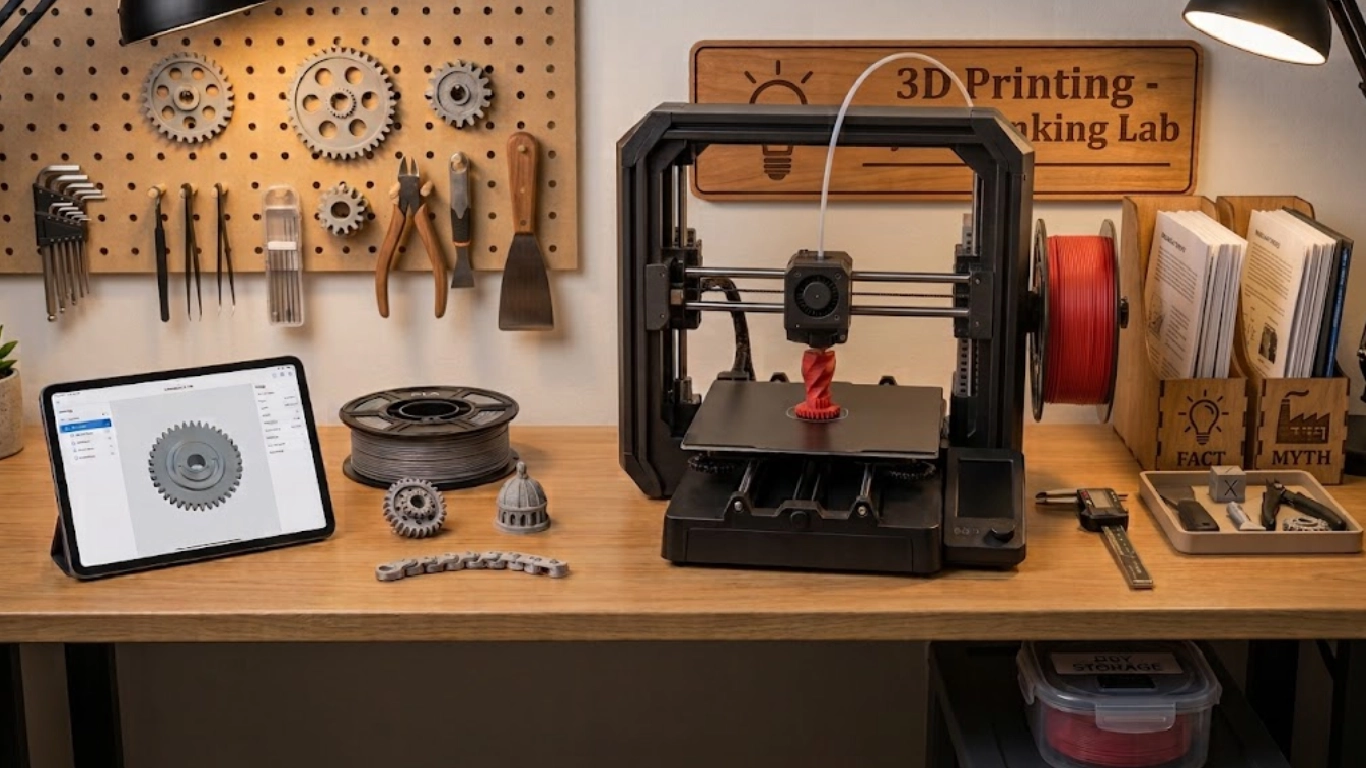
3D printing has come a long way, but plenty of outdated ideas about the technology are still floating around.
You might have heard that 3D printers are difficult to use, that 3D printed parts are too weak to be useful, or that you need to be an expert in computer-aided design before you can print anything. Maybe you have even assumed that 3D printing is mainly about making little plastic toys.
The reality in 2026 is quite different.
Modern 3D printers, slicer software and printing materials have made 3D printing much more accessible to beginners, hobbyists, makers and small businesses. That does not mean every print will be perfect straight out of the box, but many of the barriers associated with older 3D printing technology have become much easier to manage.
Let’s clear up some of the most common 3D printing myths and look at what is actually true.
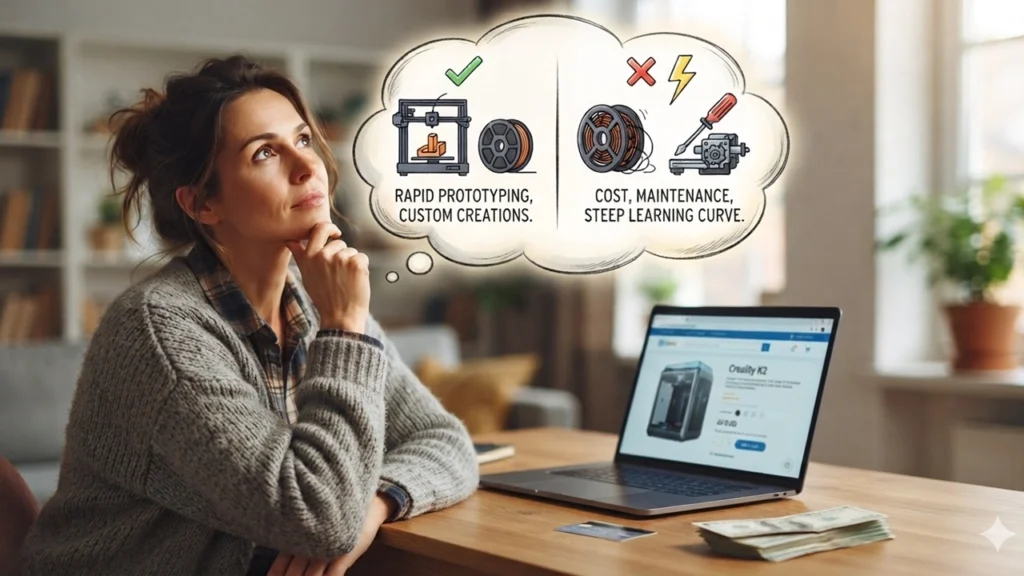
Myth 1: “3D Printing Is Too Technical for Me”
This may have been a reasonable concern years ago, when setting up a 3D printer could involve a lot of manual calibration and troubleshooting.
Modern 3D printers are considerably more beginner-friendly. Features such as automatic bed levelling, improved sensors, easier-to-use interfaces and pre-configured slicer profiles can take much of the guesswork out of getting started.
You will still need to learn a few basics, such as choosing the correct filament, preparing a model and understanding your printer’s settings. However, you do not need to become a 3D printing expert before you can make your first successful print.
If you are completely new to the hobby, our guide to buying your first 3D printer is a great place to start.
Myth 2: “3D Printed Parts Aren’t Strong Enough to Be Useful”
A 3D printed part is not automatically weak simply because it was 3D printed.
The strength of a printed object depends on several factors, including the material, print orientation, infill, wall thickness, layer height and printing settings.
Materials such as PETG and ASA can produce strong, durable parts for a wide range of practical applications. Even PLA, which is one of the most popular beginner-friendly filaments, can be surprisingly strong when a part is designed and printed correctly.
There are limitations, of course. A 3D printed component is not automatically suitable for every high-stress, high-temperature or safety-critical application.
The important point is that strength is something you can design for. Understanding infill and print orientation can make a significant difference to how well a part performs.
Myth 3: “You Have to Know How to Design 3D Models”
You can absolutely learn 3D modelling, but you do not need to design your own models to enjoy 3D printing.
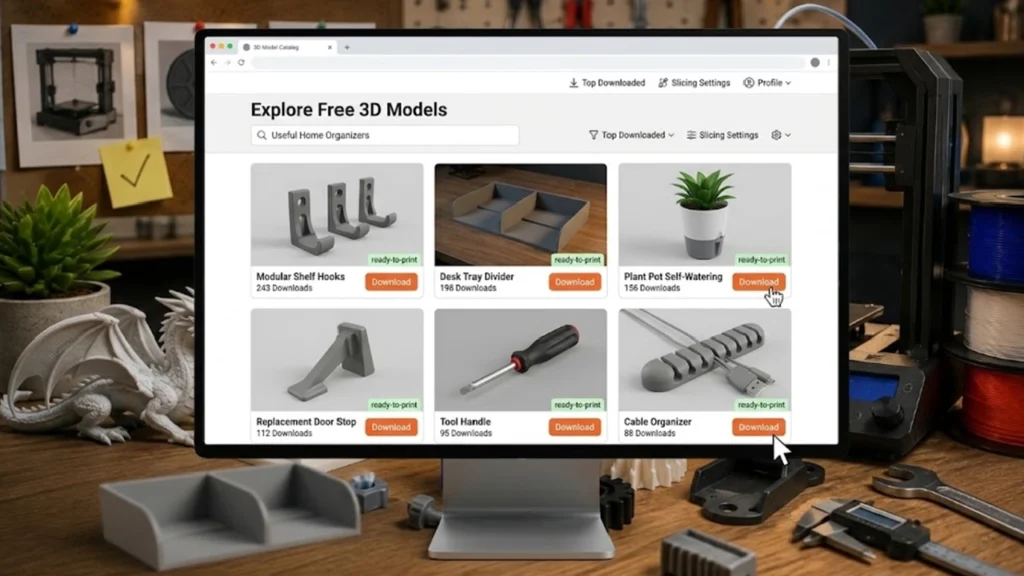
There are thousands of ready-to-print models available online, covering everything from storage organisers and plant accessories to replacement parts, tools, toys and decorative objects.
For beginners, this means you can download a model, load it into your slicer and start learning the printing process without first spending months learning CAD software.
If you eventually have an idea that does not already exist, then learning 3D design opens up even more possibilities. There are also plenty of free 3D design tools available, making it easier than ever to experiment with creating your own models.
Myth 4: “3D Printers Are Ridiculously Expensive”
The cost of 3D printing depends heavily on the type of printer and what you want to use it for.
While professional and industrial 3D printing equipment can certainly be expensive, you do not need an industrial machine to get started with FDM 3D printing at home.
There are now many entry-level and mid-range printers designed for hobbyists and makers, while filament is generally an accessible consumable compared with many traditional manufacturing materials.
However, the cheapest printer is not necessarily the best printer for you.
Think about what you want to make, which materials you want to use, how much printing you expect to do and how much hands-on tinkering you are comfortable with. Choosing the right printer for your needs can save you money and frustration in the long run.
Myth 5: “3D Printing Is Just for Toys and Novelty Gadgets”
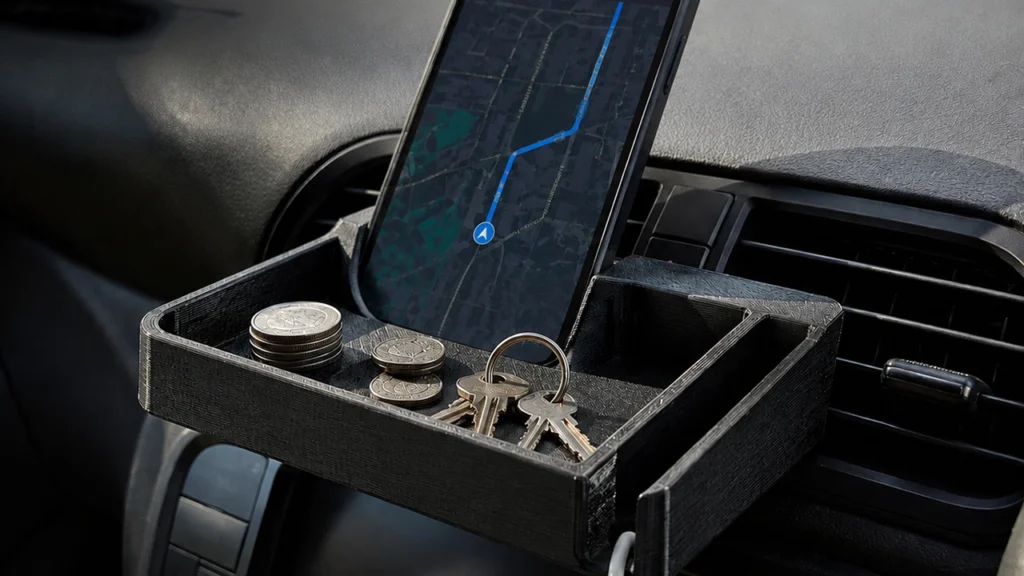
Toys and fun models are certainly popular uses for 3D printers, but they are only a small part of what the technology can do.
3D printing is used for prototypes, replacement components, brackets, organisers, jigs, fixtures, custom tools and small production runs. It can also be particularly useful when you need a specific part that is difficult or expensive to find commercially.
For small businesses, 3D printing can make it possible to produce customised products or prototypes without investing in traditional manufacturing tooling.
In other words, 3D printing is a manufacturing technology. The fact that it can also produce a very impressive articulated dragon is simply a bonus.
Myth 6: “3D Printing Is Too Slow to Be Worth It”
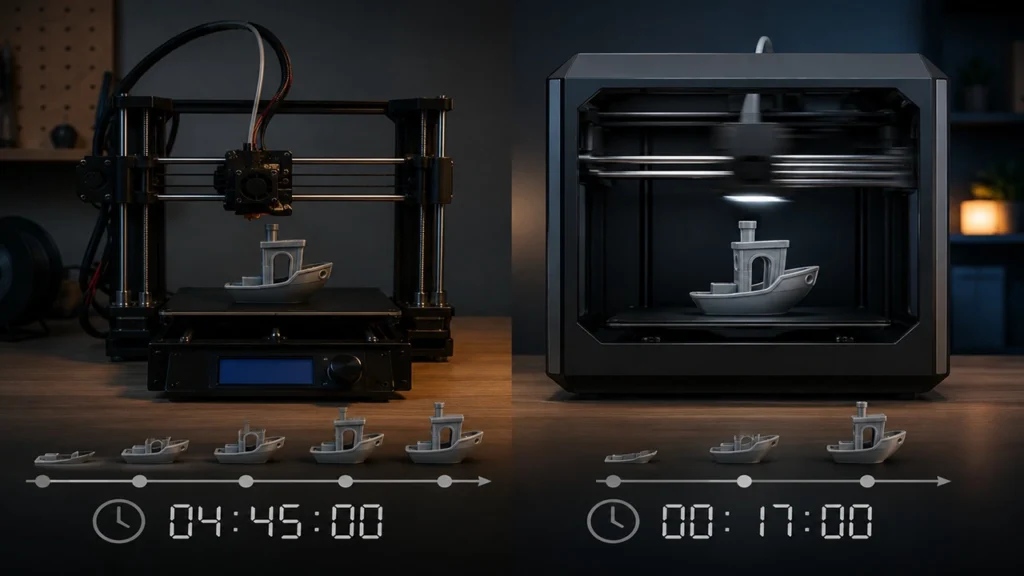
There is some truth behind this one: 3D printing is not always the fastest way to manufacture a large number of identical products.
However, speed needs to be considered in context.
Modern high-speed 3D printers can produce parts considerably faster than many older machines, and printing speed can be adjusted depending on the desired balance between production time and print quality.
More importantly, 3D printing can be extremely efficient when you need one custom item, a prototype, a replacement part or something that simply is not available off the shelf.
If the alternative is waiting weeks for a custom component, ordering it internationally or having a mould manufactured, a few hours of 3D printing may suddenly look very fast.
Myth 7: “Every Failed Print Means Something Is Broken”
A failed print can be frustrating, but it does not automatically mean that your 3D printer is faulty.
Many common 3D printing problems are caused by settings, filament, bed adhesion, temperature or environmental conditions.
Warping, stringing, under-extrusion and over-extrusion are all examples of problems that can often be diagnosed and corrected without replacing your printer.
This is one of the reasons learning basic 3D printer troubleshooting is so valuable. Instead of seeing a failed print as a disaster, you can start treating it as useful information.
And thankfully, most common printing problems have already been encountered by countless other makers. There is usually a logical reason for what went wrong – and a solution.
Myth 8: “All 3D Printer Filament Is Basically the Same”
If you have only ever seen a spool of filament from a distance, it can be easy to assume that one plastic is much like another.
It isn’t.
Different 3D printing materials have different properties and are suited to different applications. PLA is popular because it is relatively easy to print and works well for a huge range of projects. PETG offers a useful combination of strength and durability, while ASA is better suited to applications where UV and weather resistance are important.
Flexible materials such as TPU are another category entirely, allowing you to produce parts that can bend and flex rather than remaining rigid.
Choosing the right filament can therefore be just as important as choosing the right printer. Before starting a project, consider factors such as strength, flexibility, temperature resistance, UV exposure and the environment in which the finished part will be used.
Myth 9: “3D Printers Are Messy and Will Take Over My House”
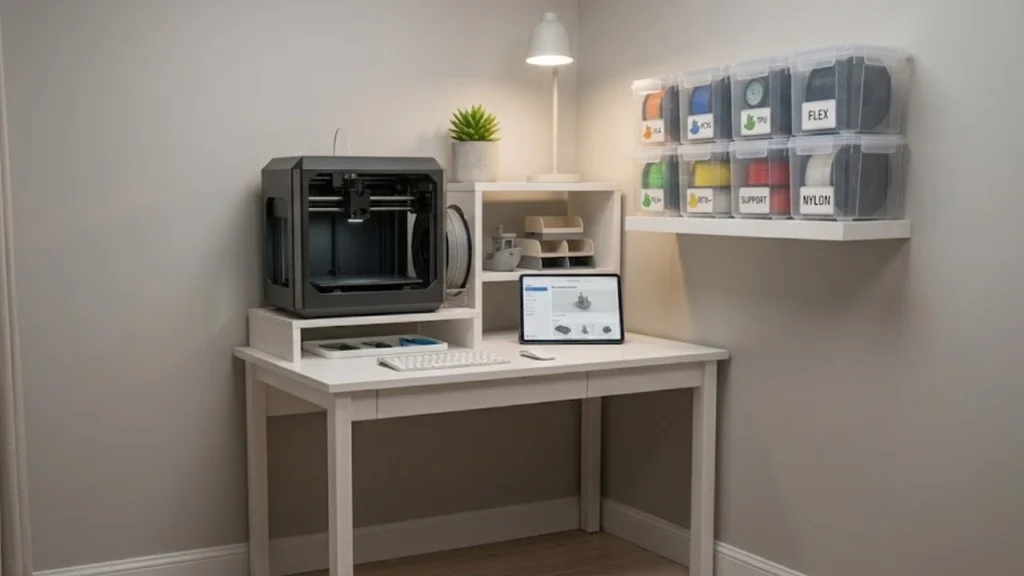
A 3D printer does take up some space, but it does not necessarily require an entire workshop.
FDM printers are relatively self-contained, and many modern machines are designed with home users in mind. Depending on the printer and material, you may also have options such as enclosed machines or quieter operation.
The bigger consideration is often not the printer itself, but everything around it.
You need somewhere stable to place the machine, somewhere to store your filament and enough ventilation and space to operate it safely. Filament storage is particularly important in South Africa, where moisture can affect certain materials and lead to poorer print quality.
Once you have a sensible setup and get into the habit of storing filament properly, 3D printing does not have to turn your home into a miniature factory.
So, What Is the Reality of 3D Printing?
Most 3D printing myths have at least a little truth behind them – they are just often based on older technology, limited experience or unrealistic expectations.
No, a 3D printer will not necessarily produce a perfect part with one click. You will have occasional failed prints, you will need to learn how different materials behave, and some projects will require a little trial and error.
But that is also part of the fun.
You do not need to be an engineer, professional designer or technology expert to get started. You can begin with a straightforward printer, readily available models and a few basic skills, then learn as you go.
Whether you want to make practical household items, experiment with prototypes, create custom products or simply print something because it looks cool, modern 3D printing is far more accessible than many people realise.
Still not sure which printer is right for you? Start with our guide to buying your first 3D printer, or explore the 3D printers available from 3D Print Lab and find a machine that suits your experience, budget and printing goals.
