
If you’ve spent any time 3D printing, you’ve probably experienced it at least once. A spool that printed perfectly a few weeks ago suddenly starts producing rough surfaces, excessive stringing, weak layers, or strange popping sounds from the nozzle.
In most cases, the problem isn’t your printer settings. It’s moisture.
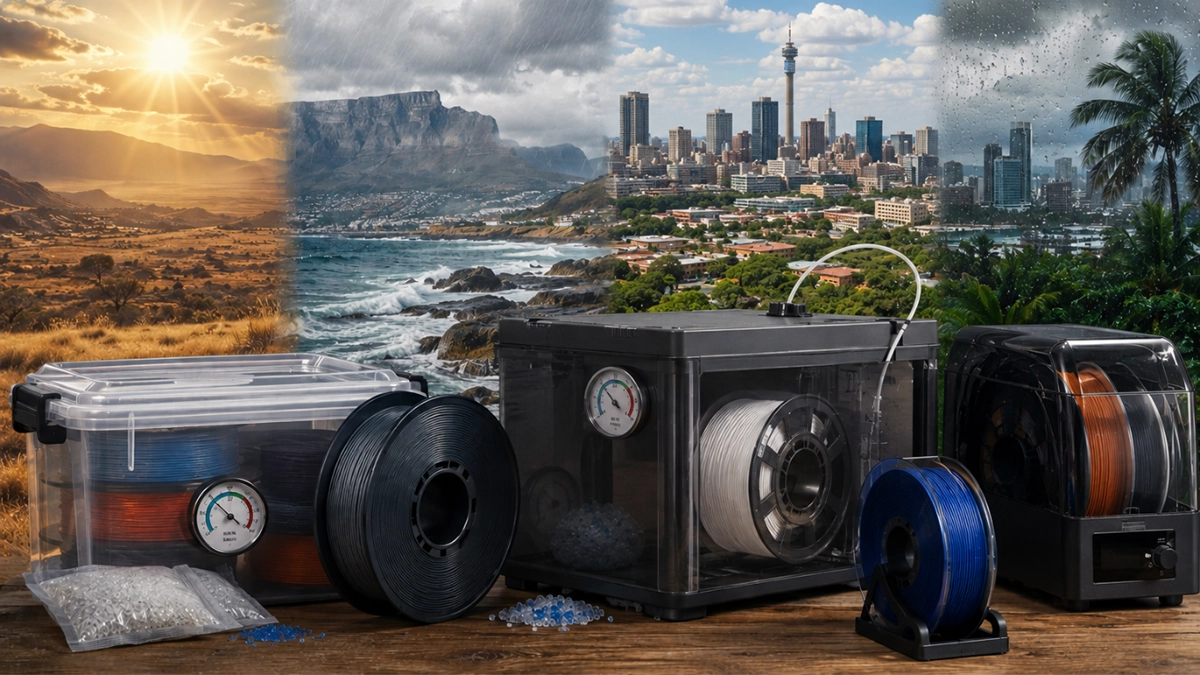
Proper 3D printer filament storage is one of the easiest ways to improve print quality and reduce wasted material, especially in South Africa where humidity levels can vary dramatically depending on where you live. A spool stored safely in the Karoo may survive months without issue, while the same spool left exposed in Durban could absorb moisture in just a few days.
The good news? Wet filament is usually preventable and often recoverable.
In this guide, we’ll cover how moisture affects filament, the best filament storage methods for South African conditions, how to tell when filament has absorbed water, and how to dry it properly. These recommendations are based on widely accepted filament-storage and drying practices in the 3D-printing community.
Why Filament Absorbs Moisture
Most 3D printing materials are hygroscopic, which means they naturally absorb moisture from the air around them.
Once moisture enters the filament, problems begin during printing. As the filament passes through the hot nozzle, the trapped water rapidly turns into steam. That steam creates tiny bubbles inside the melted plastic, causing inconsistent extrusion and poor print quality.
Common signs of wet filament include:
- Crackling or popping noises while printing
- Rough or bubbly print surfaces
- Weak layer adhesion
- Excessive stringing and oozing
- Inconsistent extrusion
- Brittle filament that snaps easily
Some materials are far more moisture-sensitive than others.
Most moisture-sensitive filaments:
- Nylon
- PVA
- TPU / TPE
- PETG
Less sensitive (but still affected over time):
- PLA
- ABS
- ASA
Even PLA, often considered beginner-friendly, can absorb enough moisture to affect print quality if left exposed for long periods.
South Africa’s Climate Makes a Big Difference
When it comes to filament humidity control, your location matters more than many people realise.
Gauteng and the Highveld
The inland Highveld generally has relatively dry air, especially during winter. Humidity often sits between 30% and 50%, making filament storage more forgiving.
However, summer thunderstorms can cause sudden humidity spikes.
Best approach:
Airtight storage containers with silica gel are usually more than enough for PLA and PETG. More sensitive materials like Nylon should still be stored carefully.
Cape Town and the Western Cape
Cape Town’s Mediterranean climate brings dry summers and damp winters. During winter, garages and workshops can become noticeably humid.
Coastal air also means humidity remains higher than inland areas throughout the year.
Best approach:
Use sealed containers with desiccant year-round, and consider a dedicated dry box during winter months.
Durban and the KZN Coast
Durban presents one of the toughest environments for filament storage in South Africa.
Humidity regularly sits between 65% and 85%, and during summer it can climb even higher. In these conditions, exposed filament can absorb moisture surprisingly quickly.
Best approach:
Airtight storage is essential, not optional. Dry boxes and filament dryers become extremely useful here, especially for Nylon, TPU, and PETG.
Dry Interior Regions
Areas like the Karoo and Northern Cape are naturally dry, making moisture less of a constant concern.
In these regions, protecting filament from dust and UV exposure may actually matter more than humidity.Best approach:
Basic sealed storage with desiccant is usually sufficient.South Africa’s Climate Makes a Big Difference
When it comes to filament humidity control, your location matters more than many people realise.
How to Tell If Your Filament Is Wet
Moisture problems are often easy to spot once you know what to look for.
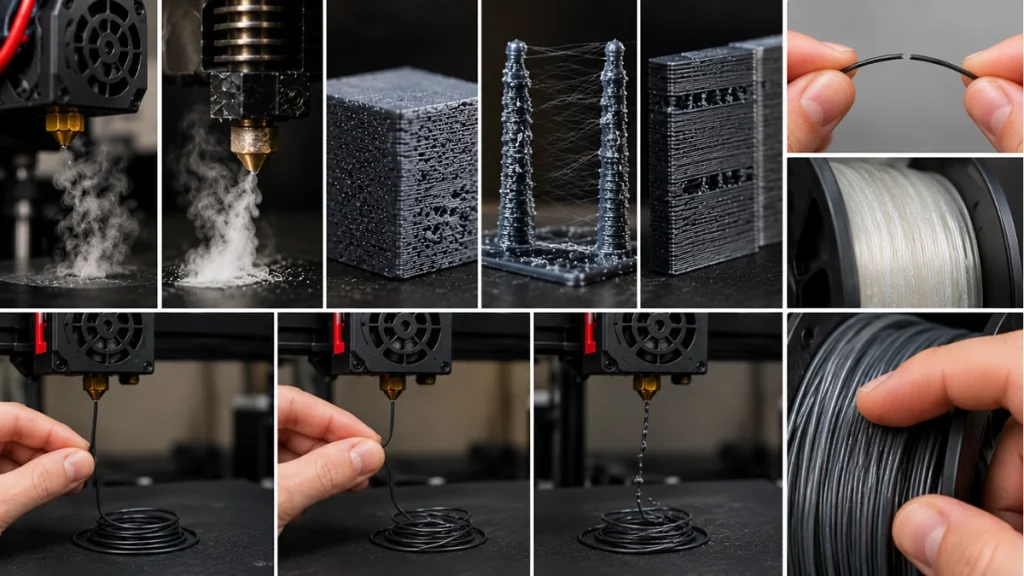
During printing:
- Popping or hissing sounds from the hotend
- Steam or vapour near the nozzle
- Rough print surfaces
- Heavy stringing
- Random gaps in walls or layers
On the spool:
- Filament snapping easily
- Slight cloudiness in transparent materials
- A tacky or soft surface feel
A quick test is to extrude filament into open air and listen carefully. Dry filament should extrude smoothly and quietly. If you hear crackling, moisture is almost certainly present.
The Best Ways to Store 3D Printer Filament
Proper filament storage solutions don’t need to be expensive. Even simple systems can dramatically extend the life of your spools.
1. Airtight Bags with Silica Gel
This is the most affordable and accessible solution.
Place your spool inside a heavy-duty resealable bag with silica gel packets, squeeze out excess air, and seal it tightly.
Vacuum storage bags work even better because they reduce the amount of moist air trapped inside.
This method works well for:
- PLA
- PETG
- Dry inland climates
2. Airtight Storage Containers
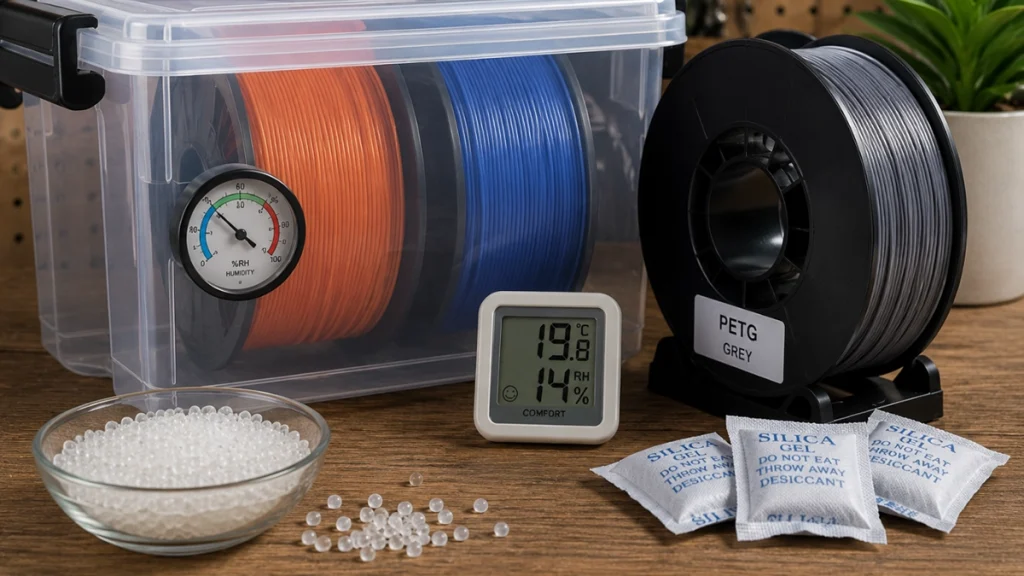
Plastic containers with rubber gasket seals are one of the most popular long-term storage solutions for serious hobbyists.
They’re durable, reusable, and easy to organise.
For best results:
- Add silica gel or molecular sieve desiccant
- Include a small hygrometer
- Keep humidity below 20–25%
This setup works well almost everywhere in South Africa.
3. Dry Boxes for Active Printing
A dry box allows you to print directly from a sealed container while keeping filament protected throughout the print.
This is especially useful for:
- Long print jobs
- Coastal regions
- Moisture-sensitive materials
In humid environments like Durban, filament can begin reabsorbing moisture while printing if left on an open spool holder.
4. Filament Dryers
Dedicated filament dryers are heated enclosures specifically designed to remove moisture from filament while also allowing active printing.
These are incredibly useful if you regularly print:
- Nylon
- TPU
- PETG
- PVA
They’re also a worthwhile investment for anyone living along the coast.
Why Desiccant Matters
No matter which storage method you use, desiccant does most of the actual moisture control.
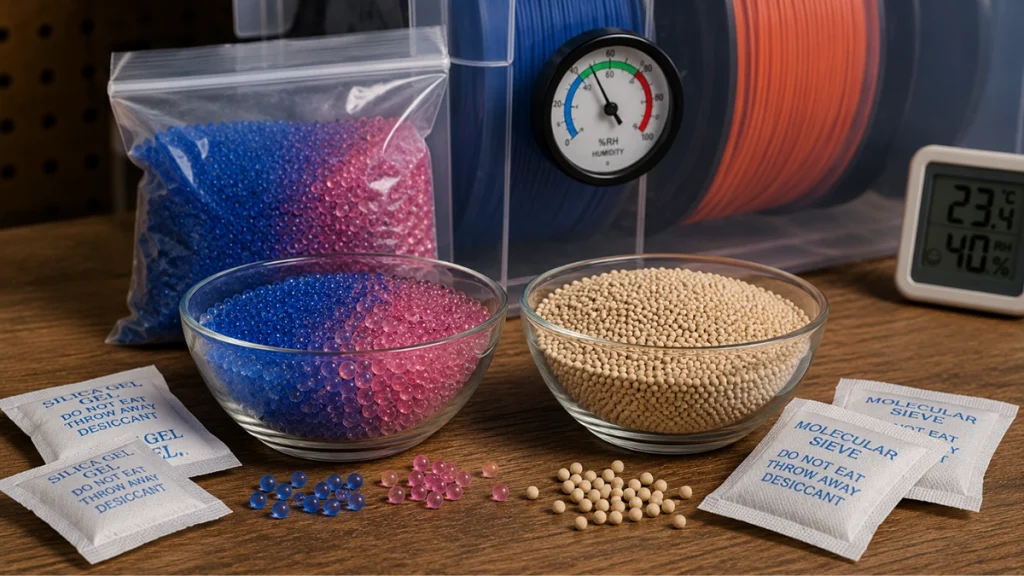
Silica Gel
Silica gel is the most common option. It absorbs moisture effectively and can usually be reused many times.
Indicator silica gel changes colour when saturated, making it easy to monitor.
Molecular Sieve
Molecular sieve desiccant is more effective at very low humidity levels, although it’s typically more expensive.
This is ideal for:
- Nylon storage
- Extremely humid climates
- Long-term filament preservation
How to Recharge Silica Gel
One of the biggest advantages of silica gel is that it’s reusable.
To recharge it:
- Spread the beads on a baking tray
- Heat at 120–150°C for 1–2 hours
- Allow to cool completely
- Return to your storage container
In very dry inland winters, silica gel may partially recharge naturally over time, but oven drying is more reliable.
How to Dry Wet Filament
If your filament has already absorbed moisture, don’t panic. Most filament can be restored.
The key is controlled heat.
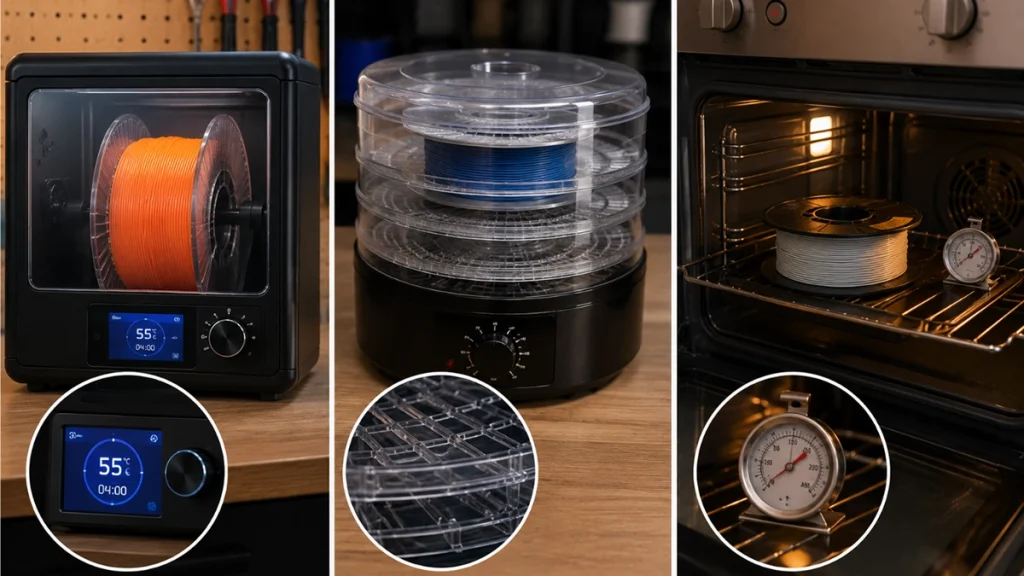
Dedicated Filament Dryer
This is the safest and easiest method. Simply select the correct temperature and allow the dryer to run for the recommended time.
Many models also allow printing directly from the dryer.
Food Dehydrator
A food dehydrator is one of the most popular DIY filament drying methods.
It provides:
- Consistent airflow
- Stable low temperatures
- Good drying performance
Just make sure the dehydrator is large enough for standard filament spools.
Household Oven
An oven can work, but caution is essential.
Many ovens struggle to maintain low temperatures accurately, and overheating can warp PLA spools or soften filament.
If using an oven:
- Use an oven thermometer
- Keep temperatures low
- Leave the door slightly open
- Avoid placing spools directly on metal surfaces
It’s generally best not to use the same oven you cook food in.
Recommended Filament Drying Temperatures
PLA
45°C-50°C
Dry for approximately 4–6 hours.
PETG
65°C
Dry for approximately 4–6 hours.
Nylon
70°C-80°C
Dry for approximately 8–12 hours.
TPU / Flexible Filaments
50°C
Dry for approximately 4–8 hours.
Practical Filament Storage Tips
If you want consistently good prints, a few small habits go a long way:
- Store all filament in sealed containers
- Add fresh desiccant to every container
- Label spools with the date opened
- Rotate older stock first
- Dry filament before long-term storage
- Monitor humidity using hygrometers
Even a simple storage system can dramatically improve print consistency.
Final Thoughts
Good 3D printer filament storage is one of the easiest upgrades you can make to your printing workflow.
South Africa’s climate varies massively from region to region, and understanding your local humidity levels can save you from failed prints, wasted filament, and endless troubleshooting.
Whether you’re printing in the dry Karoo, rainy Cape Town winters, or Durban’s humid coastal air, the right combination of airtight storage, desiccant, and proper drying methods will keep your filament in top condition.
A little moisture management now can save a lot of frustration later — and help ensure every spool delivers the print quality you expect.